Calculate your total project budget by accounting for the door itself (typically $600-$4,000 depending on material and size), professional installation ($200-$800), and removal of your existing door ($50-$200). Just like savvy strategies such as link building for local business require upfront investment for long-term returns, garage door decisions demand careful consideration of immediate costs versus durability benefits.
Request itemized quotes from at least three licensed contractors in your area. This transparency reveals hidden fees like permit costs, disposal charges, or structural repairs that weren’t obvious during initial estimates. One homeowner we worked with in 2026 discovered a $300 header replacement need only after getting detailed quotes, avoiding a nasty surprise mid-project.
Factor in the material quality difference between budget and premium options. A basic steel door might cost $800 installed, but could require replacement in 10-12 years. An insulated carriage-style door at $2,500 often lasts 20+ years while reducing energy bills by $150-$200 annually. “I thought I was saving money with the cheaper option until my heating costs jumped,” shared Jennifer M., a recent client who eventually upgraded.
Consider repair versus replacement thresholds carefully. If repair costs exceed 50% of a new door’s price, or your current door is over 15 years old, replacement typically makes financial sense. Our 24/7 service team frequently encounters homeowners who spent $600 patching problems on a $1,200 door, money that could have gone toward a superior replacement.
Don’t overlook the operational cost savings. Insulated doors reduce HVAC strain, while modern openers use 75% less electricity than pre-2020 models. These seemingly small differences compound significantly over a door’s lifespan, affecting your true total cost of ownership.
Understanding True Garage Door Cost Components
Material Selection and Pricing
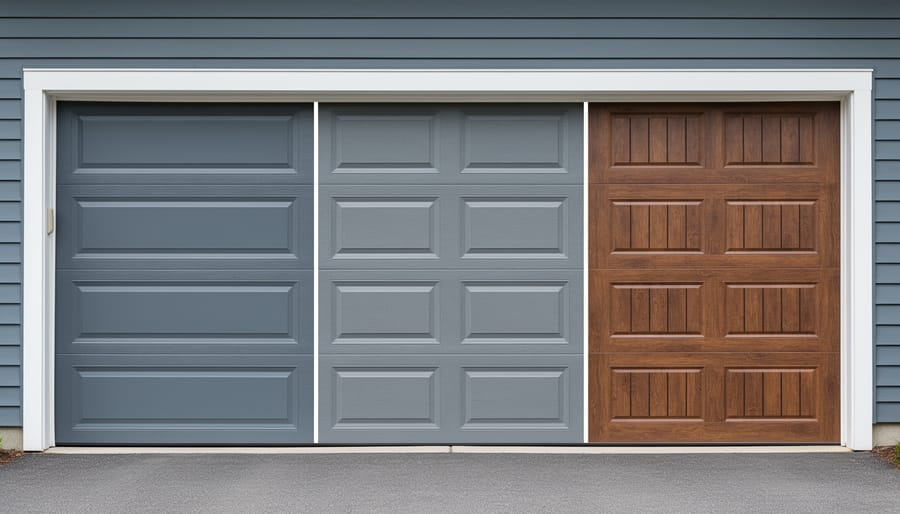
The material you choose for your garage door represents one of the most significant cost variables in your project, with prices ranging from around $600 for basic steel models to over $5,000 for premium wood or custom composite options in 2026.
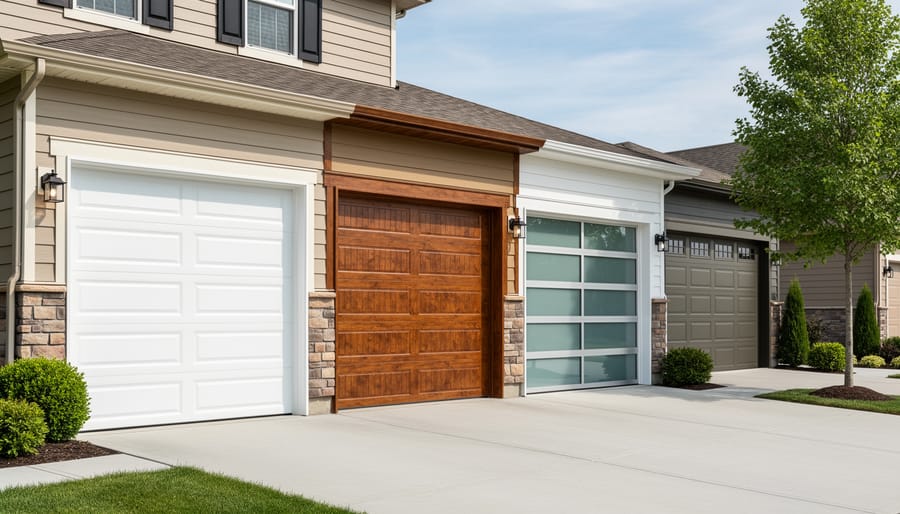
Steel doors dominate the market for good reason: they offer excellent durability at accessible price points, typically between $800 and $2,500 depending on gauge thickness and insulation. Heavier gauge steel costs more upfront but resists denting better and provides superior insulation, which translates to lower energy bills over the door’s 15-20 year lifespan.
Wood garage doors deliver unmatched aesthetic warmth and can be customized to virtually any design specification. However, expect to invest $2,500 to $5,000 or more, plus ongoing maintenance costs for sealing and refinishing every few years to prevent weather damage and warping.
Aluminum doors with frosted or clear glass panels suit contemporary architectural styles beautifully and cost between $1,500 and $3,500. They are lightweight, resist rust, and require minimal maintenance, though they provide less insulation than steel or composite alternatives.
Composite materials like fiberglass or vinyl-wrapped steel offer the appearance of wood without the maintenance burden, pricing comparably to mid-range steel at $1,200 to $2,800. These materials resist moisture, won’t rot, and maintain their appearance with simple cleaning.
Your choice should balance initial budget against your home’s architectural style, climate conditions, and how long you plan to own the property.
Installation and Labor Expenses
Professional installation represents 30-50% of your total garage door investment, but this isn’t an area where you want to cut corners. A skilled technician brings precision alignment, proper spring tension adjustment, and safety sensor calibration, tasks that impact both longevity and household safety.
Quality installation includes removing your old door, disposing of materials, fitting the new system to your specific opening dimensions, and thoroughly testing all mechanical components. Experienced installers spot potential structural issues before they become expensive problems, checking for frame damage, settling foundations, or inadequate header support.
Same-day service availability typically costs 15-25% more than standard scheduling, but it solves urgent situations like broken doors compromising home security. Companies offering 24/7 response maintain larger crews and inventory, expenses reflected in their pricing structure.
Labor rates vary by region and complexity. Basic single-door installations run $200, $500, while custom double doors with smart openers and hurricane reinforcement can reach $800, $1,200. That premium buys warranty-backed workmanship and the confidence that your 400-pound door operates safely above your vehicles and family.
Customization and Aesthetic Upgrades
Personalization transforms a functional garage door into an architectural statement that enhances your home’s curb appeal and property value. Window configurations range from simple frosted panels to full-length glass designs, each adding $200, $800 depending on size and glazing type. Custom colors and finishes, powder-coated steel, wood-grain textures, or contemporary matte blacks, typically add 15-25% to base pricing but create cohesive exterior aesthetics that resonate with buyers during resale.
Hardware selections like decorative handles, hinges, and rail systems contribute $150, $600 to your investment while reflecting your design sensibilities. Patio garage doors with full-view glass panels represent premium customization, commanding $2,500, $5,000 but transforming garages into versatile living spaces. Smart integration, keypad entry, smartphone controls, and activity monitoring, adds $300, $900 yet delivers convenience that modern homeowners expect in 2026.
The Hidden Costs: What Most Homeowners Overlook
Automatic Opener Systems
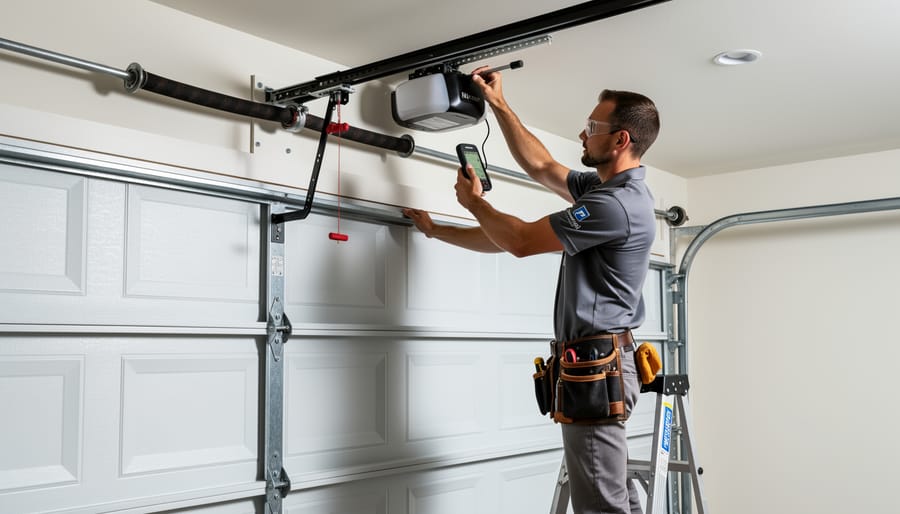
Modern garage door opener systems in 2026 represent a significant evolution from basic models, with prices ranging from $200 for standard belt-drive units to $800 or more for premium smart-enabled systems. Smart home integration adds $100-300 to your investment but delivers convenience through smartphone control, voice assistant compatibility, and activity monitoring that alerts you if your door keeps going up unexpectedly or remains open.
Battery backup systems, now essential in many regions, add $150-250 to your opener cost but ensure functionality during power outages, a critical feature for security and accessibility. Wi-Fi connectivity, automatic closing timers, and delivery mode features that allow temporary access for packages represent the current standard in mid-to-high-tier openers.
When budgeting, consider that professional installation typically adds $150-300 to opener costs, but ensures proper safety sensor calibration and motor programming. The cheapest opener installed incorrectly costs more long-term than a quality system installed right the first time, making professional setup a worthwhile investment in both safety and performance.
Hurricane Doors and Regional Requirements
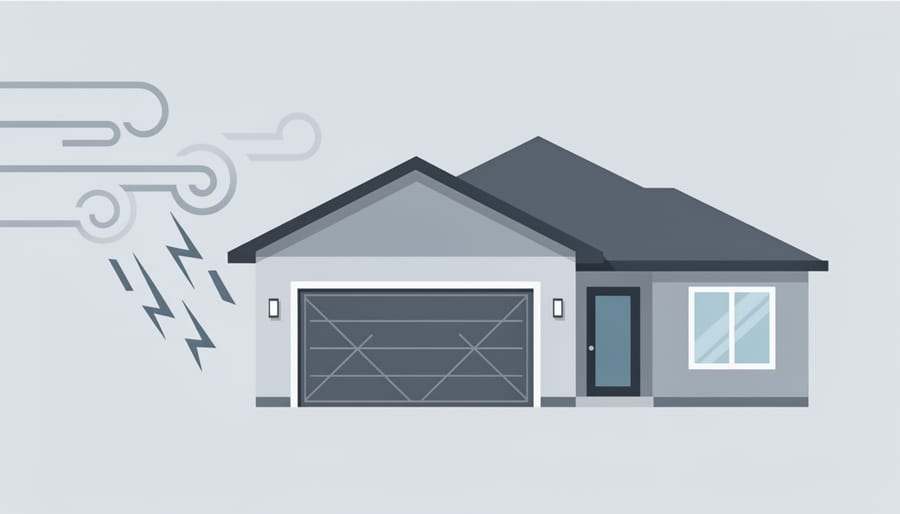
Living in hurricane-prone regions like coastal Florida or the Gulf Coast adds another layer to your garage door budget. Storm-rated doors that meet current 2026 building codes typically cost 30-50% more than standard models, expect $2,500-$5,000 for a basic hurricane-rated single door compared to $1,500-$3,000 for conventional options.
These doors feature reinforced panels, impact-resistant materials, and enhanced track systems engineered to withstand sustained winds exceeding 140 mph. Many jurisdictions now mandate these installations for new construction and replacements in designated wind zones, making the upgrade non-negotiable regardless of personal preference.
The investment protects more than just your garage. When hurricane-force winds breach a garage door, they create catastrophic interior pressure that can lift roofs and collapse walls. Insurance companies recognize this risk, many offer premium reductions of 5-15% for certified storm doors, offsetting costs over time.
Property value benefits prove equally tangible. Homes with current code-compliant hurricane doors command higher resale prices and close faster in storm-vulnerable markets, where buyers increasingly demand verified storm protection before making offers.
Warranty and Service Agreements
When calculating your garage door investment, factor in warranty coverage and service agreements that protect you beyond the initial installation. A comprehensive warranty should cover both parts and labor, with clear terms about what situations trigger coverage. Many manufacturers offer limited warranties on components, but professional installers often provide additional guarantees on their workmanship.
The real value emerges with companies offering 24/7 emergency service availability. A garage door that fails at 10 PM on a Friday becomes a security vulnerability, and providers with round-the-clock response capabilities prevent extended exposure to risk. While service agreements with emergency coverage might add to upfront costs, they eliminate the panic of searching for help during urgent situations and typically include priority response times and discounted repair rates that offset the annual fee within a single emergency call.
Repair vs. Replacement: Making the Right Financial Decision
When Repairs Make Economic Sense
Not every garage door problem requires a complete replacement. In many cases, strategic repairs deliver the most economical solution while extending your door’s useful life by years. Understanding which issues fall into this category saves homeowners from unnecessary expenses.
Spring replacements represent one of the most common and cost-effective repairs. Torsion springs typically last 7-10 years with regular use, and replacing them runs $150-$300 depending on your door’s specifications. This repair takes professionals about 90 minutes and immediately restores full functionality to a door that otherwise operates perfectly.
Cable replacements, roller upgrades, and track adjustments similarly fall into the smart-repair category. These components wear from normal use but don’t compromise the door’s structural integrity. Professional service costs range from $75-$250 for most of these fixes, far less than replacement expenses.
Panel damage from minor impacts often qualifies for cost-effective repair when confined to a single panel. Replacing one or two panels costs $250-$500, preserving your existing door system while maintaining curb appeal.
Following proven garage door repair tips and maintaining a relationship with qualified technicians helps identify these repairable situations before small problems escalate into replacement-level failures.
Signs It’s Time for Complete Replacement
When your garage door shows multiple signs of deterioration, replacement often costs less than repeated repairs. Age is the first indicator, most residential garage doors last 15-20 years with proper maintenance. If yours is approaching or exceeding that range, replacement prevents escalating repair bills.
Safety issues demand immediate attention. Visible cracks in panels compromise structural integrity, creating hazards for vehicles and people. Springs showing rust or gaps indicate imminent failure, which can cause serious injury. Doors that hesitate, reverse unexpectedly, or crash shut despite functioning sensors pose genuine safety risks that repairs can’t reliably fix.
Energy efficiency matters more in 2026 than ever. Single-layer doors without insulation allow significant heat transfer, increasing utility costs year-round. Modern insulated doors with proper weather stripping reduce energy waste by up to 20%. If your heating or cooling bills have climbed while your garage feels like an oven in summer or freezer in winter, your door’s inefficiency is costing real money.
Extensive weather damage, warped panels, pervasive rust, or rotted sections, rarely justifies piecemeal fixes. Calculate repair costs against replacement: if repairs exceed 50% of a new door’s price, replacement delivers better value and modern safety features you’re currently missing.
Building Value the Right Way: Quality Over Quick Fixes
# Building Value the Right Way: Quality Over Quick Fixes
The temptation to cut corners exists everywhere, from home improvement decisions to business marketing strategies. When homeowners search for garage door costs online, they often encounter contractors who promise unrealistically low prices, just as businesses encounter SEO agencies promising instant rankings through purchased backlinks. Both shortcuts share the same fundamental flaw: they sacrifice long-term value for short-term savings.
Quality garage doors represent a different philosophy entirely. A professionally installed door from materials like steel, aluminum, or composite wood costs more upfront because it delivers tangible benefits: superior insulation that reduces energy bills year after year, hardware engineered to withstand thousands of cycles without failure, and finishes that maintain their appearance despite UV exposure and weather extremes. These doors protect your vehicles, belongings, and family while enhancing curb appeal and property value.
The same principle applies to every aspect of your home and business. Buying backlinks might temporarily boost a website’s search rankings, but search engines eventually penalize these artificial manipulations, destroying the very visibility the business sought. Meanwhile, competitors who invested in genuine expertise, helpful content, and authentic customer relationships build sustainable growth. The parallel is clear: authentic value creation always outlasts manufactured shortcuts.
When evaluating garage door proposals, watch for red flags that suggest corner-cutting: vague material specifications, unusually fast installation timelines that skip proper preparation, or warranty limitations that protect the contractor rather than the homeowner. These warning signs mirror the promises of instant results without substance.
Working Doors builds value through transparent pricing, skilled technicians who take pride in proper installation, and 24/7 availability when you need repairs. This commitment to quality service creates satisfied customers who return for future needs and recommend us to neighbors, the same way quality content attracts genuine website visitors. Real value compounds over time, whether measured in door longevity or customer trust.
How to Budget for Your Garage Door Investment in 2026
Start by assessing your current garage door’s condition honestly. Take photos of problem areas, note operational issues, and consider how much longer the door can safely function. This baseline helps you determine whether you’re budgeting for immediate replacement or can plan for a future upgrade.
Your budget should reflect realistic 2026 pricing while accounting for your specific needs. Here’s a systematic approach:
- Assess your current door condition thoroughly, documenting all existing issues and safety concerns
- Determine must-have features versus nice-to-have upgrades, separating essentials like safety sensors from aesthetic preferences
- Get multiple quotes from licensed professionals, ensuring each includes detailed breakdowns of materials, labor, and installation timelines
- Factor in annual maintenance costs, typically ranging from $150 to $300 for preventive service visits
- Evaluate financing options, including $400 financing programs that spread costs over manageable monthly payments
- Plan for contingencies by adding 10-15% to your estimated total, covering unexpected structural repairs or permit requirements
When requesting quotes, ask providers specific questions: What does installation include? Are old door removal and disposal covered? How long will materials take to arrive? What warranty covers both the door and installation work? Does pricing include opener programming and safety testing?
Set aside funds for the first year’s maintenance. Quality installations reduce immediate repair needs, but budgeting $200-$300 for a professional tune-up six months after installation ensures optimal performance. Consider annual service agreements that bundle maintenance visits with priority 24/7 emergency response.
For larger projects, financing transforms a significant upfront cost into predictable monthly payments. Many homeowners find that spreading a $3,000-$5,000 investment over 12-24 months fits existing budgets better than depleting savings. Compare interest rates, look for zero-interest promotional periods, and calculate total repayment costs before committing.
When it comes to your garage door investment, the principle is simple: value comes from quality, not corners cut. Just as buying backlinks might seem like a shortcut but ultimately undermines credibility, choosing the cheapest garage door option often costs more in repairs, replacements, and frustration down the road.
At Working Doors, we believe in transparency. We’ll give you an honest assessment of what your home needs, whether that’s a simple repair or a complete replacement. Our team provides detailed quotes that account for materials, installation, and long-term reliability, so you know exactly what you’re investing in.
Need help making the right choice for your garage door? We’re available 24/7 to answer your questions and provide expert guidance. Contact Working Doors today for a straightforward consultation that puts your needs first.